
Standard 20 ft Chassis
Standard 20 ft containers
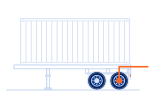
Fixed Rear
Tandem
A container chassis is the wheeled steel frame a container rides on behind a truck. This guide covers every common type and the specialty ones, what each carries and how to choose.
Quick Answer
Chassis are sorted by container length, axle setup and special purpose. Most shipments use a standard 20 ft chassis or a 40 ft gooseneck.
Standard 20 ft containers
Fixed Rear
Tandem
Standard and high-cube 40 ft containers
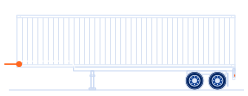
Heavy containers; weights still verified
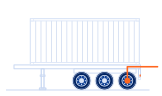
Three Rear
Axles
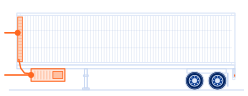
Reefers that need power on the road
Chassis for 20 ft containers. Short boxes are often heavy, so the axle setup matters.
A 20 ft slider chassis is the standard chassis for a single 20 ft container: a 23 ft 6 in frame with a tandem axle set that slides rearward to spread the weight of a heavier box.
Source: DCLI, 23.5 ft Slider Chassis, TRAC Intermodal, chassis equipment types, Cheetah Chassis, all container chassis models
Carries: One 20 ft containerAxles: Tandem, 49 in spreadLength: 23 ft 6 in, slides to 27 ft 6 in
A 20 ft tri-axle slider is a longer three-axle chassis built for one heavy 20 ft container; its frame slides to spread the weight across the axles.
Source: DCLI, 20 ft Tri-Axle Slider Chassis, TRAC Intermodal, chassis equipment types, Cheetah Chassis, all container chassis models, Hyundai Translead, container chassis
Carries: One heavy 20 ft containerAxles: Three axlesLength: 33 ft, extends to 41 ft
Chassis for 40 ft and 40 ft high cube containers, the most common size.
A 40 ft gooseneck chassis is the standard marine chassis for a 40 ft container: its raised front section, the gooseneck, fits into the tunnel under the container floor so the box rides lower.
Source: DCLI, 40 ft Gooseneck Chassis, TRAC Intermodal, chassis equipment types, Hapag-Lloyd, Container Specification
Carries: One 40 ft or 40 ft high cubeAxles: Tandem, 49 in spreadLength: 40 ft 8 in
A lightweight gooseneck chassis is a 40 ft gooseneck built with a lighter frame, so less of the legal gross weight is used by the chassis itself.
Source: DCLI, 40 ft Lightweight Gooseneck Chassis, TRAC Intermodal, chassis equipment types, Cheetah Chassis, all container chassis models, Hyundai Translead, container chassis
Carries: One 40 ft (some fleets also list 45 ft)Axles: Tandem, 49 in spreadLength: 40 ft 6 in to 41 ft
A straight frame chassis has a flat frame with no gooseneck, for 40 ft containers built without a gooseneck tunnel.
Carries: One 40 ft container with no gooseneck tunnelAxles: Tandem, 49 in spreadLength: 40 ft
A 40 ft tri-axle chassis adds a third axle under a 40 ft gooseneck to spread the weight of a heavy 40 ft container.
Source: DCLI, 40 ft Tri-Axle Chassis, TRAC Intermodal, chassis equipment types, Pratt Industries, tank and container chassis, Cheetah Chassis, all container chassis models
Carries: One heavy 40 ft containerAxles: Three axlesLength: 40 ft 6 in to 41 ft
One chassis that fits more than one container size, or spaces its axles further apart.
A 20/40 combo chassis extends from about 30 ft to about 40 ft so one chassis can carry either a 20 ft or a 40 ft container.
Source: DCLI, 20/40 ft Combo Tandem Chassis, Cheetah Chassis, all container chassis models, Hyundai Translead, container chassis
Carries: One 20 ft or one 40 ftAxles: Tandem, 49 in or spreadLength: 30 ft 6 in to 40 ft 6 in
A 12-pin chassis has extra twist-lock positions in the middle, so it can carry two 20 ft containers end to end as well as one 40 ft or one 20 ft.
Source: Cheetah Chassis, all container chassis models, Hyundai Translead, container chassis
Carries: One 40 ft, one 20 ft, or two 20sAxles: Tandem, spread or tri-axleLength: About 40 ft
A tri-axle combo chassis extends to fit more than one container length and has three axles for heavy loads; DCLI calls its version the Anysizer.
Source: DCLI, Triaxle Anysizer Chassis, Hyundai Translead, container chassis, Max-Atlas, container chassis, Pratt Industries, tank and container chassis
Carries: One 20, 40 or 45 ft, or two empty 20s (model-dependent)Axles: Three axlesLength: About 32 ft to 46 ft
A spread-axle chassis places its two axles about 109 in apart instead of the usual 49 in, which changes how the weight on the axle group is counted under axle-spacing rules.
Source: DCLI, Spreadaxle Anysizer Chassis, Cheetah Chassis, all container chassis models, Hyundai Translead, container chassis
Carries: 20 ft or 40 ft, by modelAxles: Two axles, 109 in spreadLength: About 33 ft to 46 ft
Longer chassis for 45 ft marine and 53 ft domestic containers.
A 40/45 extendable chassis is a gooseneck that extends from about 40 ft to about 45 ft so it can carry either a 40 ft or a 45 ft container.
Source: DCLI, 40/45 ft Extendable Chassis, TRAC Intermodal, chassis equipment types, Hyundai Translead, container chassis, Cheetah Chassis, all container chassis models
Carries: One 40 ft or one 45 ftAxles: Tandem, 49 in spreadLength: 40 ft 8 in to 45 ft 8 in
A 45 ft gooseneck chassis is a fixed-length chassis for a single 45 ft container.
Source: DCLI, 45 ft Gooseneck Chassis
Carries: One 45 ft containerAxles: Tandem, 49 in spreadLength: 45 ft 6 in
A 53 ft chassis carries domestic 53 ft containers, the long boxes used in rail intermodal, and its tandem slides so the axles can be set for California's kingpin-to-rear-axle rule.
Source: DCLI, 53 ft Gooseneck Chassis, TRAC Intermodal, chassis equipment types, Cheetah Chassis, all container chassis models, California Vehicle Code 35401.5
Carries: One 53 ft domestic containerAxles: Sliding tandemLength: 53 ft 6 in to 53 ft 7 in
A 40/53 extendable chassis stretches from 40 ft to 53 ft so one chassis can carry marine 40 ft and 45 ft containers or domestic 48 ft and 53 ft containers.
Source: Cheetah Chassis, all container chassis models, Max-Atlas, container chassis, CIE Manufacturing, container chassis
Carries: 40 or 45 ft marine, or 48 or 53 ft domesticAxles: Usually three axlesLength: About 40 ft to 53 ft
Chassis built for a type of container or cargo rather than a length.
A 4-axle or 5-axle chassis spreads a container's weight over more axles and tires than a tandem or tri-axle chassis.
Source: Cheetah Chassis, 40 ft Lightweight Gooseneck 4-Axle, Cheetah Chassis, all container chassis models
Carries: One 40 ft; extendable 4-axle also 20, 45 or two 20sAxles: Four or five axlesLength: 40 ft 6 in (Cheetah 4-axle)
A tank chassis is a longer chassis built to carry a 20 ft ISO tank container, the framed tank used for bulk liquids.
Source: Cheetah Chassis, 43 ft 2-Axle Tank Chassis, Hi-Lo Ready, Cheetah Chassis, all container chassis models, CIE Manufacturing, container chassis
Carries: One loaded 20 ft ISO tank, or two empty with a kitAxles: Two axles, 109 in centersLength: 43 ft to 44 ft
A drop frame chassis has a deck that steps down behind the front section, which lowers the container and its center of gravity.
Source: CIE Manufacturing, container chassis, Pratt Industries, tank and container chassis, Cheetah Chassis, all container chassis models
Carries: 20 ft tank or dry, or 40 ft (by model)Axles: Two or three axlesLength: 31 ft to 43 ft
A genset chassis carries a diesel generator set mounted under the frame, which powers a refrigerated container while it is on the road.
Source: TRAC Intermodal, chassis equipment types, Cheetah Chassis, all container chassis models
Carries: One 40 ft refrigerated containerAxles: TandemLength: 40 ft 8 in (TRAC)
A tipper chassis has a hydraulic lift that raises the front of the container so bulk cargo pours out the rear doors.
Carries: 20 ft or 40 ft container of bulk cargoAxles: Two or three axlesLength: 24 ft 2 in to 40 ft
A short-box chassis has extra lock positions for small ISO-style boxes, such as 8 ft and 10 ft units.
Source: Cheetah Chassis, all container chassis models, Pratt Industries, tank and container chassis
Carries: One or two 10 ft, two 8 ft, or one 20 ftAxles: Tandem, 49 in spreadLength: 38.5 ft (Cheetah)
Every type on one table, with what it carries, its axles and its length from manufacturer specs.
| Chassis | Carries | Axles | Length | Best For |
|---|---|---|---|---|
| 20 ft slider | One 20 ft container | Tandem, 49 in spread | 23 ft 6 in, slides to 27 ft 6 in | Standard 20 ft dry containers |
| 20 ft tri-axle slider | One heavy 20 ft container | Three axles | 33 ft, extends to 41 ft | Heavy 20 ft loads such as stone, metals, paper or bagged goods |
| 40 ft gooseneck | One 40 ft or 40 ft high cube | Tandem, 49 in spread | 40 ft 8 in | 40 ft standard and 40 ft high cube containers |
| 40 ft lightweight | One 40 ft (some fleets also list 45 ft) | Tandem, 49 in spread | 40 ft 6 in to 41 ft | Heavy 40 ft loads that are close to the legal gross weight |
| 40 ft straight frame | One 40 ft container with no gooseneck tunnel | Tandem, 49 in spread | 40 ft | Non-ISO or special-purpose 40 ft boxes with no tunnel |
| 40 ft tri-axle | One heavy 40 ft container | Three axles | 40 ft 6 in to 41 ft | Heavy 40 ft loads |
| 20/40 combo | One 20 ft or one 40 ft | Tandem, 49 in or spread | 30 ft 6 in to 40 ft 6 in | Operations that switch between 20s and 40s |
| 12-pin | One 40 ft, one 20 ft, or two 20s | Tandem, spread or tri-axle | About 40 ft | Repositioning two empty 20s on one chassis |
| Tri-axle combo | One 20, 40 or 45 ft, or two empty 20s (model-dependent) | Three axles | About 32 ft to 46 ft | Heavy 20s one day and 40s the next on the same chassis |
| Spread-axle | 20 ft or 40 ft, by model | Two axles, 109 in spread | About 33 ft to 46 ft | Loads where axle spacing matters for the weight on the axle group |
| 40/45 extendable | One 40 ft or one 45 ft | Tandem, 49 in spread | 40 ft 8 in to 45 ft 8 in | Fleets that see both 40 ft and 45 ft high cubes |
| 45 ft gooseneck | One 45 ft container | Tandem, 49 in spread | 45 ft 6 in | 45 ft high cube containers |
| 53 ft domestic | One 53 ft domestic container | Sliding tandem | 53 ft 6 in to 53 ft 7 in | Domestic 53 ft rail containers |
| 40/53 extendable | 40 or 45 ft marine, or 48 or 53 ft domestic | Usually three axles | About 40 ft to 53 ft | Operations that handle both marine and domestic containers |
| 4- and 5-axle | One 40 ft; extendable 4-axle also 20, 45 or two 20s | Four or five axles | 40 ft 6 in (Cheetah 4-axle) | Very heavy containers in operations and on routes set up for them |
| Tank chassis | One loaded 20 ft ISO tank, or two empty with a kit | Two axles, 109 in centers | 43 ft to 44 ft | 20 ft ISO tank containers |
| Drop frame | 20 ft tank or dry, or 40 ft (by model) | Two or three axles | 31 ft to 43 ft | Tank containers and other loads where a lower center of gravity helps |
| Genset chassis | One 40 ft refrigerated container | Tandem | 40 ft 8 in (TRAC) | Refrigerated (reefer) containers that need power between the terminal and the warehouse |
| Tipper | 20 ft or 40 ft container of bulk cargo | Two or three axles | 24 ft 2 in to 40 ft | Bulk cargo shipped loose in containers, such as grain or resin, where the receiver has a discharge setup |
| Short-box | One or two 10 ft, two 8 ft, or one 20 ft | Tandem, 49 in spread | 38.5 ft (Cheetah) | 8 ft and 10 ft ISO-style boxes |
The carrier picks and supplies the chassis, but the details from the shipper decide which one. Send these with the shipment.
A chassis split fee is an accessorial charge billed by the trucking or drayage company when the ocean container and the chassis used to haul it are in two different locations, so the driver has to make an additional trip to pick up the chassis from a separate location before picking up the container. At LA/Long Beach, whether a split is needed depends on which chassis pool supplies the chassis and where that pool lets truckers pick up and return equipment.
The Pool of Pools at LA/Long Beach was disbanded. DCLI states that TRAC Intermodal ceased Pool of Pools operations on June 30 and that, starting July 1, DCLI runs its Direct ChassisLink Pools (DCLP) daily rental pool with start/stop locations across the harbor, along with chassis leasing and a reservation-based private pool at its Navy Way facility. TRAC states that on July 1, 2026 it transitioned from the Pool of Pools to the TRAC Pacific Southwest Pool (TPSP), a neutral pool of standard 20, 40 and 45 ft chassis.
DCLI lists DCLP start/stop locations at several terminals and rail ramps, and added two depots: the Navy Way Chassis Depot in San Pedro and Fast Lane in Wilmington. Chassis are available at each location based on inventory, and motor carriers request bare chassis releases from DCLI by email. TRAC states that all TPSP chassis are picked up from Pier S, Pier B or TraPac LA and returned to a start/stop location. When the container is at a different location from the chassis, the driver makes an additional trip to pick up the chassis first, and the trucking or drayage company bills a chassis split fee.
DCLI states that chassis out-gated after June 30 in the LA/Long Beach pool are billed under chassis rules, meaning each intermodal equipment provider may bill for chassis usage regardless of the container. TRAC bills certain ocean carriers directly and bills use for other carriers' containers to the motor carrier. DCLI states that when an ocean carrier's carrier haulage chassis contract is with DCLI, truckers can take a DCLP chassis at any of its start/stop locations, and that for ocean carriers it does not support, usage charges are the motor carrier's responsibility. Chassis use is separate from container free time; see Demurrage, Detention and Per Diem and the glossary entry for chassis use charge.
Send the ocean carrier, the terminal, the container size and whether the container travels under carrier haulage or merchant haulage with the shipment details. The carrier confirms which pool supplies the chassis and whether a split is needed. Pool locations and billing rules are set by the equipment providers and can change; check the current DCLI and TRAC pages listed under Sources.
A chassis's GVWR or carrying capacity is a manufacturer rating. What a truck, chassis and container may weigh on public roads is set by federal and state law, and depends on the axles, their spacing and the route. No chassis type makes a load legal by itself; the carrier confirms equipment and route before dispatch.
Specs are manufacturer specs or equipment provider fleet specs, which DCLI describes as typical of its fleet and not for any specific chassis. Check the current spec with the carrier.
Request a quote online, or call or email our team.